
With Dubai’s summer temperatures regularly climbing past 45°C and direct sun hitting windows for most of the day, the blinds you choose do a lot more than dress up a room — they decide how hard your AC has to work, how much your furniture fades, and how comfortable your home actually feels. Not every blind is built for this climate, though. A style that works beautifully in a cooler country can let heat pour straight through in the UAE.
This guide breaks down which blinds genuinely hold up against Dubai’s sun, why they work, and which ones suit which rooms — so you’re not guessing when you order custom blinds in Dubai for your home or office.
Why Dubai’s Heat Needs a Different Approach to Window Coverings
Most heat doesn’t enter a room through the walls — it comes straight through the glass, both as direct sunlight and as radiant heat that keeps building up once the sun has moved on. A thin, light-passing fabric or a loosely fitted blind will block glare but do very little to stop that heat gain. The blinds that actually make a difference in Dubai combine three things: high UV/solar blockage, an insulating air gap or dense weave, and a tight fit against the window frame so heat can’t sneak around the edges.
With that in mind, here are the window coverings that consistently perform best.
1. Blackout Roller Blinds
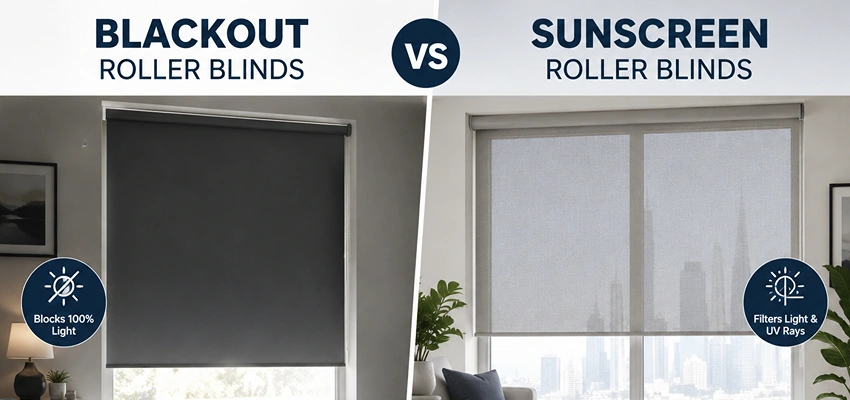
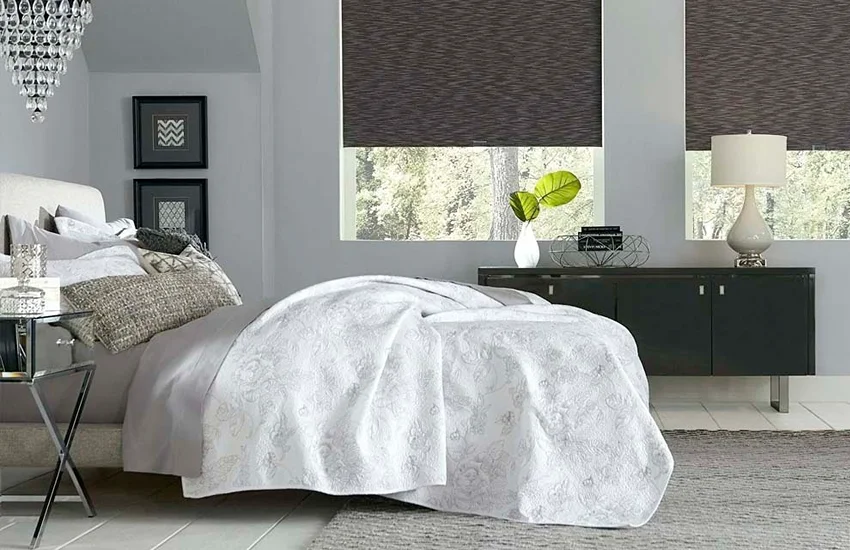
Blackout blinds use a fully opaque, often foam-backed fabric that blocks close to 100% of sunlight and a large share of radiant heat along with it. Because they cut light completely rather than filtering it, they’re the strongest option for rooms that face west or get direct afternoon sun — think bedrooms, media rooms, or any space where you want it dark and noticeably cooler during the day.
Best for: bedrooms, nurseries, west-facing living rooms
Trade-off: blocks natural daylight completely, so it suits rooms where privacy and darkness matter more than an open, bright feel
2. Sunscreen Blinds
Sunscreen blinds are woven from a mesh fabric with tiny perforations that let you see out and let soft daylight in while blocking a large share of UV rays and glare. Unlike blackout fabric, they don’t turn the room dark — they simply take the harsh edge off direct sun, which makes them a favourite for spaces where people are actually working, cooking or relaxing during the day.
Best for:kitchens, living rooms, home offices, any window you don’t want fully covered Trade-off: lower openness percentages block more heat but reduce the view; a 3–5% openness fabric is the usual sweet spot for Dubai
3. Honeycomb (Cellular) Blinds
Honeycomb blinds are built from folded fabric cells that trap a layer of air between the window and the room. That trapped air acts as insulation, slowing down heat transfer in both directions — so your AC doesn’t have to fight as hard to keep a room cool. They’re a strong pick for villas with large glass frontage, where the cooling bill is the real problem, not just glare.
Best for: villas, floor-to-ceiling windows, rooms with high AC usage Trade-off: typically a higher upfront cost than roller or vertical blinds, offset over time by lower energy bills
4. Zebra (Day & Night) Blinds
Zebra blinds alternate sheer and solid fabric bands on a single roll, so tilting the vanes lets you switch between soft filtered light and near-blackout coverage throughout the day. They’re particularly useful in Dubai because the sun’s intensity changes so much between morning and mid-afternoon — you can dial the coverage up as the heat builds.
Best for:dining rooms, living areas, rooms used at different times of day Trade-off: slightly more moving parts than a standard roller, so fit and mechanism quality matter more
5. Motorized Blinds
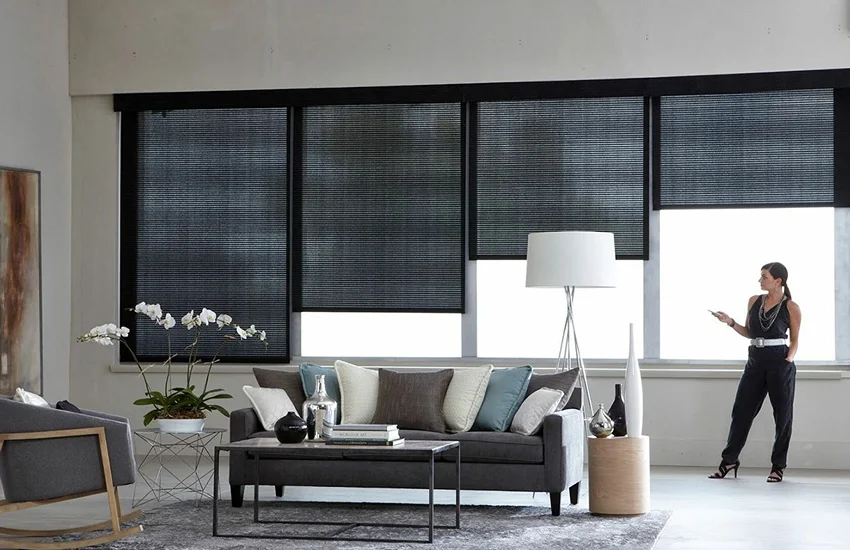
Motorized blinds pair any fabric type — blackout, sunscreen, or honeycomb — with app, remote, or voice control, and can be scheduled to close automatically during peak sun hours. For villas with multiple large windows or double-height glass that’s difficult to reach, this isn’t just a convenience; it’s often the only practical way to keep coverage consistent across the whole home.
Best for: villas, large or hard-to-reach windows, smart-home setups Trade-off: higher initial investment, but pairs with any fabric above to add automated heat control
6. Wooden and Venetian Blinds
Wooden blinds and Venetian blinds let you angle the slats to block direct sun while still letting air and diffused light through — useful in rooms where you want a natural, textured look rather than a flat fabric roll. Real wood can warp slightly in extreme heat and humidity, so faux-wood or aluminium slats tend to hold up better on sun-facing windows in the UAE.
Best for: studies, living rooms, homes with a warm interior palette Trade-off: less heat-blocking than blackout or honeycomb fabric, better suited to moderately sunny rather than west-facing windows
7. Outdoor Blinds
Heat protection shouldn’t stop at the glass. Outdoor blinds made from weather-resistant PVC or mesh fabric shield balconies, terraces and majlis seating from direct sun and dust, which also reduces how much heat radiates into the rooms behind them.
Best for: balconies, pergolas, outdoor seating areas Trade-off: needs a weather-rated fabric and track system, not a standard indoor blind adapted for outdoor use
Best Blinds by Room
| Room | Recommended Blinds |
|---|---|
| Bedroom | Blackout roller blinds, honeycomb blinds |
| Living Room | Sunscreen blinds, zebra blinds |
| Kitchen | Sunscreen blinds, PVC vertical blinds |
| Office | Sunscreen blinds, motorized roller blinds |
| Kids Room | Cordless blackout blinds |
| Bathroom | Faux-wood Venetian or PVC vertical blinds |
| Outdoor/Balcony | Weather-resistant outdoor blinds |
Blinds or Curtains for Dubai Heat?
If you’re weighing up window coverings more broadly, it’s worth reading our breakdown of curtains vs blinds — in short, blinds generally offer tighter heat and light control because they sit closer to the glass, while curtains add softness but let more heat gain through the edges. And if you’ve already settled on roller blinds specifically, our guide to blackout vs sunscreen roller blinds goes deeper into which fabric suits which room.
Getting the Most Out of Your Blinds in Dubai’s Climate
A few habits make any of the above perform better:
- Mount blinds as close to the glass as possible — a tight fit stops heat and hot air from creeping in around the edges.
- Choose lighter colours for sunscreen and roller fabrics — light shades reflect more heat than dark ones.
- Combine layers on the worst-facing windows — a sunscreen blind for daytime with a blackout blind behind it for afternoon and night gives you both light control and full heat blocking.
- Keep motorized blinds scheduled, not manual — automation means coverage happens even when nobody’s home to close them.
Final Thoughts
There’s no single “best” blind for Dubai heat — the right choice depends on the room, the window’s orientation, and whether you value darkness, daylight, or automation more. As a rule of thumb: go blackout for bedrooms, sunscreen for living spaces and kitchens, honeycomb where energy savings matter most, and motorized wherever manual operation isn’t practical.
Ready to fit your windows properly?Get a free measurement and consultation from The Blinds Dubai, or browse our full range of custom window blinds built for Dubai’s climate.